Introduction — a little story, some numbers, and a question
I remember walking into a small clinic in Guadalajara where the therapist greeted me with a grin and a promise: “This bed will change your sleep.” It stuck with me. Infrared beds are popping up in spas and clinics — market reports say the personal wellness device market grew by over 20% last year — and people want results, pronto. So, what really makes one model work better than another? (Qué onda, right?)
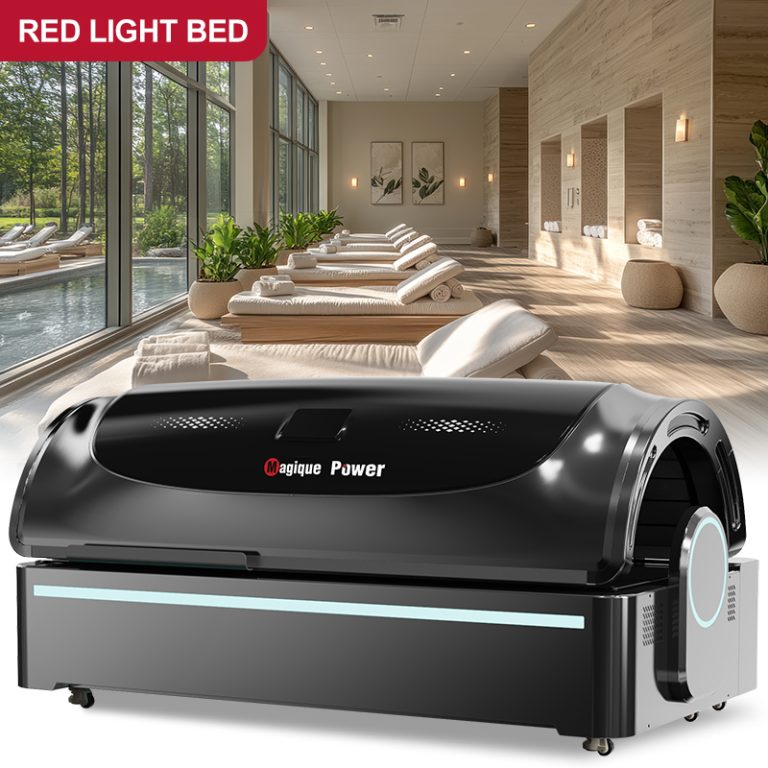
I’ll be honest: I’m curious, and I bet you are too. We’ll talk wavelength choices, photobiomodulation basics, and how device build quality — like the LED array and thermal management — changes outcomes. I’ll share what I’ve learned from visiting clinics, testing units, and talking to techs. Ready to dig in? Let’s move on and look under the hood.
Part 2 — Where common fixes fail: hidden flaws in current red light solutions
First off, if you’re shopping for a red light pod, there are plenty of shiny promises. But many fall short because they ignore core engineering realities. The biggest trouble? Overheating from poor thermal management and cheap power converters. When a unit runs hot, the diodes shift output and you lose consistent wavelength delivery — and that kills the therapy’s effectiveness.
Why do common fixes fail?
Look, it’s simpler than you think: brands skimp on the LED array quality to hit price targets. They also use generic optics that scatter light instead of focusing it. That means uneven energy density across your skin. Clinicians tell me they see clients improve for a week, then plateau. The cause is basic physics — wavelength drift, inconsistent irradiance, and poor heat sinking. We’re not talking about mystical stuff here. It’s photobiomodulation basics and component choice.
Also, users complain about session comfort. A bed that buzzes or has hot spots ruins the rest-and-recover experience. I’ve heard that from massage therapists and from my own friends — they stop using it. That’s a hidden pain point: adoption falls, so the therapy never gets the chance to show benefits. In short, design shortcuts lead to disappointing outcomes. We need better specs, clearer metrics, and honest tempo on treatment protocols if we want reliable results.
Part 3 — New-tech principles and what to watch for next
What’s next? Devices that get the basics right. Engineers are moving toward integrated thermal sinks, tuned LED arrays, and smart power converters that keep irradiance stable. These systems match precise wavelengths and maintain energy density across the treatment surface. When that happens, photobiomodulation becomes repeatable — not a hit-or-miss experiment. I’ve seen prototypes that use feedback loops and small edge sensors to adjust output in real time — clever stuff that keeps the device efficient.
What’s Next?
For consumers and small clinics, that means looking for red light systems that state clear specs: peak wavelength, irradiance at target distance, and thermal profiles. A good red light pod will list those numbers and explain session timing. Also, consider serviceability — can you replace modules? Is there documented calibration? These details matter for long-term value.
My advice — and I speak from testing and talking to technicians — is to pick based on measurable metrics. Don’t chase LEDs by brand name alone. Check the numbers. Three quick metrics to evaluate: irradiance uniformity across the surface, wavelength stability under load, and thermal dissipation rating. Those tell you if a product will stay useful after weeks of sessions. Weighing those will help you avoid the common pitfalls I described earlier — funny how that works, right?

To wrap up, I want to emphasize practicality. We want devices that work reliably, that people will use regularly, and that clinics can service. Measure what matters: energy density, wavelength accuracy, and build quality. If you check those boxes, you’ll get a device that actually helps clients — and that’s what I care about. For vetted solutions and further details, I’ve been following options from brands like Magique Power. They present specs clearly, which makes my life — and yours — easier when choosing a real red light solution.