Intro: A Hot Yard, a Fast Spike, and a Hard Choice
I’ve spent over 17 years buying, testing, and babysitting grid batteries from West Texas to the Central Valley. Utility scale battery storage shows its true colors when the heat hits and the grid twitches. Early one July afternoon near Laredo in 2022, I watched frequency dip to 59.84 Hz and bounce back in under 300 ms as a 100 MW system snapped online—great on paper, but the follow-up told the story. The site posted 97.3% monthly availability, yet we still burned two whole days chasing a flaky PCS control card and a cranky BMS handshake (y’all know that look a tech gives when Modbus registers don’t line up). I had to weigh which utility scale battery storage manufacturers could handle that chaos without turning my O&M plan into ground beef.
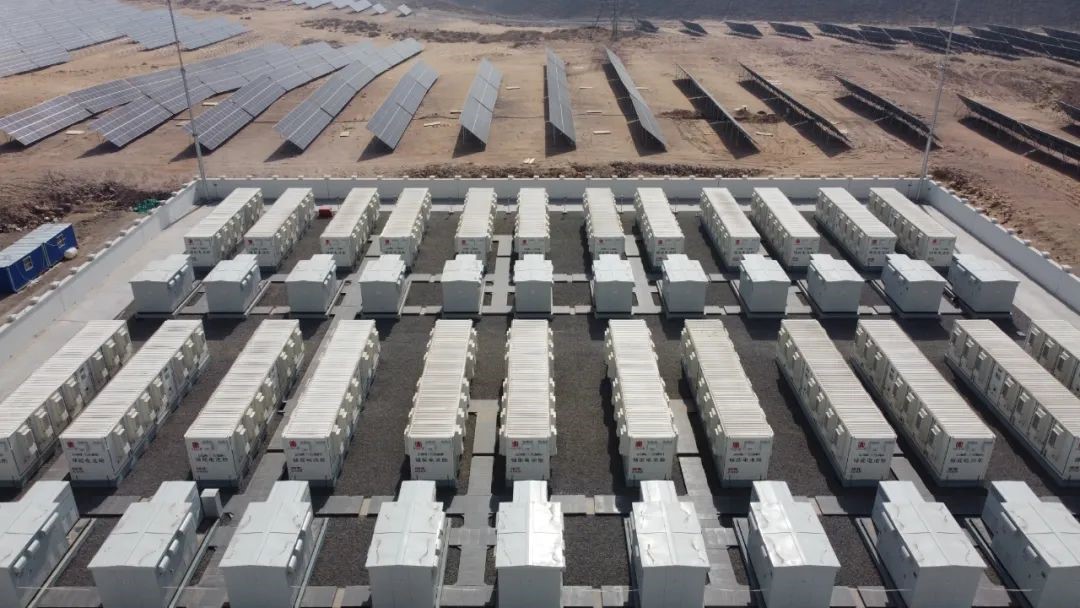
Data gets real fast in the field: a 12% reactive power cap here, a 1.8% round-trip efficiency drop at 40°C there, and dispatch penalties stacking up like mesquite after a storm. So here’s the straight question I ask myself every time—who builds the assets that stay calm when ERCOT throws a curve, and who just prints glossy PDFs? Let’s walk through the deeper checks that separate the sturdy from the show ponies—then size up what’s coming next.
Part 2: The Quiet Problems Buyers Miss (and How I Learned to Spot ’Em)
What are we missing in the spec sheets?
When folks compare utility scale battery storage manufacturers, they stare at nameplate power and warranty terms. Fair. But the pain I see lands between those lines. In 2019, a 50 MW site outside Pecos County lost 18% of its daily throughput for a week—not because cells were bad, but because the power converters threw harmonics that forced the plant controller to clamp real power. Nobody flagged that in the tender. The PCS vendor blamed the EMS. The EMS blamed the SCADA gateway. Meanwhile, dispatch was getting dinged every hour.
I judge makers by how they engineer the whole stack: cell thermal margins, BMS tuning at high C-rates, PCS current limits under LVRT, and EMS logic that won’t go glassy-eyed when a market signal stutters. Look, I’m no poet—I just want setpoints to stick. Give me a site test at 45°C ambient with 1C charge and 0.5C discharge, and show the drift in state-of-charge estimation after 48 hours. Truth be told, it ain’t my first rodeo. If a supplier shrugs when I ask about edge computing nodes in the container controller, or how their firmware handles CRC errors on the feeder, I move on. Because downtime is a bill that shows up on Friday—no kidding—and it never says please.
Part 3: Forward-Looking Checks That Change the Buyer’s Math
What’s Next
The good news is the better makers are shifting from “sell the rack” to “prove the ride.” I’ve seen two new principles pay off. First, tighter EMS-to-PCS coordination using model predictive controls—nothing fancy in the lingo, just smarter ramp limits that reduce oscillations during AGC. Second, cell-level data rolled up with anomaly scoring at the container edge, so you catch a swelling string before it drags the fleet. The best utility scale battery storage manufacturers now publish real duty-cycle results: 2-hour peaker mode vs. 4-hour arbitrage, with degradation curves split by temperature bands. That’s the kind of honesty that saves your hide in August.
Let me stack a quick comparison from a 2023 pilot east of San Angelo. Vendor A nailed 150 ms frequency response but dropped 1.6% efficiency when ambient crossed 38°C. Vendor B responded slower—220 ms—but held efficiency above 91% and kept the fire suppression panel from false-tripping during a PCS reboot (small detail, big grace). I’d take B for sites with long hot hours and tight curtailment rules. So, how do you choose? I keep three metrics pinned on my clipboard. One: measured round-trip efficiency under your actual duty cycle at ≥35°C, not lab temps. Two: annualized capacity fade at 0.5C/1C split, reported per block with BMS firmware version noted. Three: proven EMS/SCADA interoperability, documented with site names and dates, plus mean time to recovery after a comms fault. If a supplier can’t show those three with timestamps, I reckon they’re not ready to carry your PPA on their back. For a grounded view on where the tech is headed—and who’s engineering for the hard days—keep an eye on HiTHIUM.